


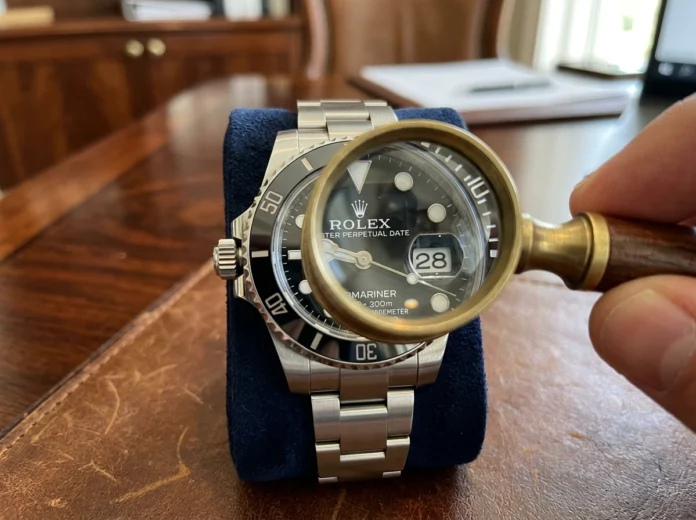


A Rolex is more than a watch. It’s a symbol of craftsmanship, status, and lasting value. That reputation also makes Rolex one of the most copied watch brands in the world. Counterfeiters have become skilled, and some fakes look convincing at first glance. If you’re buying a pre-owned model or shopping outside an authorized dealer, knowing what to look for can save you from a costly mistake.
This guide walks you through the clearest warning signs that a Rolex may not be the real thing. Whether you’re a first-time buyer or a seasoned collector, these checkpoints will help you shop with confidence.
Why Authenticity Matters
Buying a fake Rolex isn’t just about wasted money. A counterfeit lacks the materials, engineering, and resale value of a genuine timepiece. It may stop working within weeks, and reselling it could even land you in legal trouble. Authentic Rolex watches hold value for decades. Fakes hold none.
The good news is that real Rolex watches are built to incredibly tight standards. Counterfeiters almost always cut corners somewhere. Once you know where to look, those shortcuts become easy to spot.
1. Incorrect Weight and Feel
One of the fastest checks is simply holding the watch. Genuine Rolex watches use high-grade 904L stainless steel, solid gold, or platinum. These materials give the watch a noticeable heft.
Many fakes use cheaper, lighter alloys to save money. If a stainless steel Rolex feels surprisingly light or hollow, that’s a red flag. The weight should feel substantial and balanced in your hand. A watch that feels like a toy almost certainly isn’t authentic.
2. Poor Cyclops Magnification
Look at the date window. On a real Rolex, the Cyclops lens magnifies the date by about 2.5 times, making it easy to read and centered neatly within the window.
Counterfeit watches often get this wrong. The magnification may be weak, around 1.5 times, or the date may sit off-center. Sometimes the lens distorts the numbers or appears cloudy. Hold the watch under good light and check whether the date fills the window clearly. If it looks small or shifted, be cautious.
3. Misaligned Markers and Text
Rolex is famous for precision. Every hour marker, every letter, and every logo is placed with extreme accuracy. On a genuine model, the printing is crisp, evenly spaced, and perfectly aligned.
Fakes frequently slip up here. Watch for:
- Hour markers that sit slightly crooked
- Text that looks blurry or bleeds at the edges
- Uneven spacing between letters
- A crown logo that looks lumpy or poorly shaped
Use a loupe or your phone’s zoom feature to inspect the dial closely. Any sloppiness in the lettering or alignment is a strong sign of a counterfeit.
4. Low-Quality Finishing
Genuine Rolex watches show flawless finishing. The polishing is smooth, the brushed surfaces are uniform, and the edges are clean. There are no rough spots, glue marks, or scratches from manufacturing.
When you examine a suspected fake, run your eyes along the case and bracelet. Look for:
- Rough or sharp edges
- Visible glue around the crystal or bezel
- Uneven brushing or polishing
- A bracelet that rattles or feels flimsy
Rolex bracelets feel solid and move with controlled, smooth links. A loose, jingly bracelet usually signals poor construction.
5. Faulty Movement Behavior
The movement is the heart of a Rolex, and it’s where authentic watches truly stand apart. A real Rolex second hand sweeps smoothly around the dial. It does not tick in sharp, individual steps.
If you watch the second hand and notice a stuttering, ticking motion, that’s a major warning sign. The movement may be cheap quartz hiding inside a Rolex shell. Genuine mechanical movements glide with an almost continuous flow.
You can also listen. Real Rolex movements are quiet and refined. A loud, clunky ticking sound suggests a low-cost imitation. Counterfeit makers have studied these details closely, and the world of the high-end rolex superclone shows just how far some replicas go to mimic genuine movement behavior. Even so, subtle differences in smoothness and sound often give them away.
6. Suspicious Serial and Model Details
Every authentic Rolex carries a unique serial number and a model reference number. On modern watches, these are engraved with laser precision. The serial sits between the lugs at the six o’clock position, and on newer models it’s also engraved on the inner bezel, called the rehaut.
Check these details carefully:
- The engraving should be sharp, clean, and slightly raised, not shallow or sandy
- The serial and model numbers should match the watch’s age and style
- Rehaut engraving on modern models should be crisp and perfectly aligned
If the numbers look etched with acid, appear grainy, or don’t match the watch’s design era, treat it as suspicious. You can also verify details against Rolex production records or ask an authorized jeweler for help.
7. Unrealistic Pricing
If a deal seems too good to be true, it usually is. Rolex watches hold their value strongly, and even used models command high prices. A brand-new Submariner or Datejust will never sell for a few hundred dollars.
Be wary of:
- Prices far below market value
- “Today only” pressure to buy quickly
- Sellers who refuse to explain the low price
Counterfeiters rely on the appeal of a bargain. A genuine seller knows the value of their watch and prices it accordingly. An unusually cheap Rolex is one of the clearest signs something is wrong.
8. Questionable Seller Behavior
The seller can tell you as much as the watch itself. Trustworthy sellers welcome questions, provide documentation, and let you inspect the piece closely.
Watch for these red flags:
- No box, papers, or proof of purchase
- Refusal to provide clear photos of the serial and movement
- Vague answers about the watch’s history
- Pressure to pay through untraceable methods
- An online listing with stolen or stock images
A reputable seller will happily share the watch’s background and may even offer authentication. If someone dodges your questions or rushes the sale, walk away.
How to Protect Yourself
You don’t need to be an expert to avoid fakes. A few smart habits go a long way:
- Buy from authorized dealers or trusted resellers. This is the safest path.
- Request all paperwork. Original box, papers, and receipts add credibility.
- Get a professional opinion. A certified watchmaker can verify authenticity quickly.
- Take your time. Pressure tactics are a counterfeiter’s best friend.
When several of these warning signs appear together, the watch is almost certainly not genuine. Trust the details, and trust your instincts.
Final Thoughts
A real Rolex reveals itself through precision, weight, smooth movement, and flawless finishing. Counterfeits, no matter how convincing at first, tend to slip up on these fine points. By checking the weight, magnification, markers, finishing, movement, serial details, pricing, and seller behavior, you can spot a fake long before money changes hands.
Take your time, ask questions, and never let a deal rush you. A genuine Rolex is a lifetime investment, and a little patience now protects both your money and your peace of mind.