

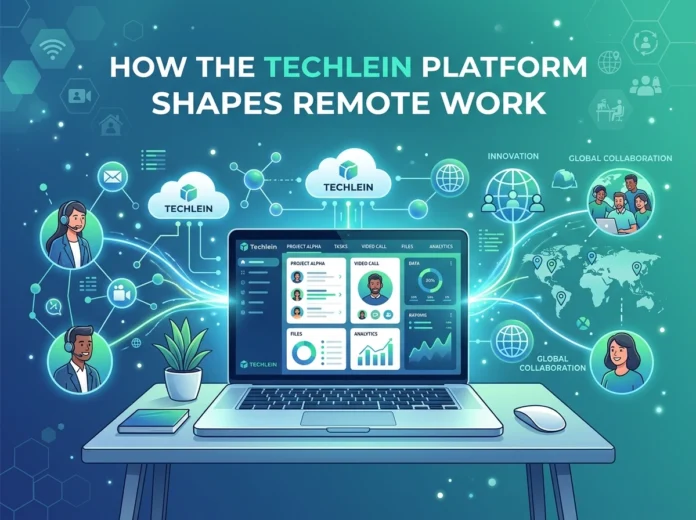


The Techlein platform is an AI-powered remote work technology solution that enhances digital collaboration through automated workflows, asynchronous communication tools, and data-driven productivity metrics. By integrating advanced artificial intelligence, the Techlein platform helps distributed teams overcome timezone barriers, streamline daily operations, and improve overall operational efficiency for global enterprises.
Remote work fundamentally altered how organizations operate, moving businesses away from centralized offices and toward distributed workforce models. As companies transitioned from temporary remote setups to permanent hybrid environments, the software required to sustain these operations underwent a massive transformation. Basic video conferencing and instant messaging applications no longer satisfy the complex needs of global, cross-functional teams.
Organizations today demand comprehensive solutions that integrate seamlessly into their existing workflows. Employees require platforms that reduce digital friction, prevent notification fatigue, and facilitate deep work without sacrificing connectivity. The Techlein platform emerged as a direct response to these evolving corporate demands, offering a unified ecosystem designed specifically for asynchronous collaboration and artificial intelligence integration.
Understanding how the Techlein platform fits into the broader ecosystem of distributed work is crucial for business leaders planning their software investments. This guide explores the evolving landscape of remote work technology, examines the specific capabilities of the Techlein platform, and details how modern teams can leverage these tools to build highly efficient, connected, and resilient digital workplaces.
What is the current state of remote work technology in 2026?
The global transition to distributed work has stabilized into a permanent operational model for most knowledge-based industries. According to recent industry data [Yomly, 2026], remote work reached 52% of the global workforce, representing a significant shift from pre-pandemic levels. Furthermore, research indicates that over 32.6 million professionals in the United States alone now operate in fully remote capacities. This massive user base drives unprecedented investment into the remote work technology sector.
Early remote work tools focused heavily on synchronous communication, forcing employees to attend virtual meetings that mirrored physical office interactions. Today, the focus has shifted entirely toward asynchronous communication platforms. Asynchronous tools allow employees to consume information and respond on their own schedules, which drastically reduces meeting fatigue and accommodates teams spanning multiple time zones.
Security and infrastructure also represent major pillars of the current technology landscape. With corporate data distributed across residential Wi-Fi networks and personal devices, enterprises require zero-trust security architectures natively built into their collaboration tools. Modern platforms must protect sensitive intellectual property without creating cumbersome login processes that hinder employee productivity.
Why are companies adopting unified remote work technology platforms?
Organizations suffer when their employees constantly toggle between disconnected applications. Task switching degrades cognitive focus and leads to fragmented data silos where important context gets lost. Choose a unified remote work technology platform like the Techlein platform if minimizing context switching and centralizing corporate knowledge matters more than utilizing disconnected, specialized micro-tools.
How does the Techlein platform innovate remote collaboration?
The Techlein platform redefines digital collaboration by placing artificial intelligence at the center of the user experience. Instead of forcing employees to manually organize files, summarize meeting notes, or schedule follow-ups, the Techlein platform automates these administrative burdens. The system actively analyzes communication patterns and project updates to surface the most relevant information to each user, ensuring that critical updates never get buried in crowded chat channels.
One of the most significant innovations of the Techlein platform is its approach to contextual awareness. When a team member opens a project workspace, the artificial intelligence engine compiles a brief summary of all activity that occurred since their last login. This means a developer in Tokyo can wake up, log into the Techlein platform, and instantly understand the decisions made by their counterparts in New York without reading through hundreds of individual messages.
Furthermore, the Techlein platform democratizes content creation and idea sharing through its native AI generation features. Users can transform basic text prompts into comprehensive project briefs, visual diagrams, and video updates. This capability ensures that team members who struggle with traditional written communication can still articulate their ideas clearly and professionally.
What makes AI-driven collaboration essential for distributed teams?
AI-driven collaboration eliminates the geographic and temporal barriers that traditionally slow down distributed teams. By translating languages in real-time, summarizing lengthy discussion threads, and predicting project bottlenecks before they occur, artificial intelligence acts as a tireless project manager. This level of automation allows human workers to dedicate their cognitive energy to strategic problem-solving and creative endeavors.
What are the key features of the Techlein remote work platform?
The Techlein platform offers a robust suite of features engineered to address the specific friction points of distributed work. Each feature operates within a centralized digital workspace, ensuring that data flows seamlessly from one application to the next.
Intelligent Asynchronous Video
The Techlein platform includes a native AI video generation and sharing tool that replaces standard text updates. Users can record screen walk-throughs, which the artificial intelligence then transcribes, translates, and summarizes. This feature allows visual thinkers to demonstrate complex software bugs or design updates without scheduling synchronous video calls.
Smart Document Collaboration
Unlike traditional word processors, the Techlein platform utilizes dynamic documentation. Multiple users can edit documents simultaneously, while the AI assistant suggests structural improvements, fact-checks data against internal company wikis, and flags contradictory information. The system automatically tags relevant stakeholders when specific project milestones mentioned in the document are updated.
Predictive Workflow Automation
The Techlein platform learns how individual teams operate over time. If a marketing team consistently routes design assets to a specific manager for approval every Thursday, the platform’s predictive engine will begin generating those approval workflows automatically. Users can manually adjust these workflows using a no-code visual builder, making complex automation accessible to non-technical staff.
Centralized Knowledge Graph
Information retrieval remains a massive challenge for remote companies. The Techlein platform solves this by building a centralized knowledge graph that connects conversations, files, code repositories, and customer data. Employees can ask the platform’s conversational interface natural language questions, such as “What was the final decision on the Q3 budget?”, and receive a cited, accurate answer instantly.
How do predictive analytics improve remote team management?
Predictive analytics within the Techlein platform provide management teams with actionable insights regarding employee workload and project health. By analyzing activity levels, deadline adherence, and communication frequency, the platform can identify teams at risk of burnout or projects drifting off schedule. Choose predictive analytics features if proactive risk mitigation matters more than retroactive performance reviews.
How does the Techlein platform overcome remote environment challenges?
Distributed environments naturally introduce challenges related to isolation, miscommunication, and productivity tracking. The Techlein platform tackles these issues through intentional design choices that promote psychological safety and operational transparency.
To combat workplace isolation, the Techlein platform features virtual coworking spaces. These digital environments simulate the ambient connectivity of a physical office. Team members can enter a shared virtual room, indicate they are focused on deep work, and remain connected via low-bandwidth audio or visual presence indicators. This creates a sense of belonging without demanding constant active participation.
Miscommunication frequently occurs when teams rely heavily on text-based messaging. Nuance and tone easily get lost, leading to unnecessary conflict. The Techlein platform mitigates this by analyzing the sentiment of internal communications. If a thread becomes overly heated or complex, the platform gently prompts the users to switch to a rich-media format, such as an asynchronous video message, to resolve the issue with greater clarity.
Productivity tracking in remote settings often devolves into invasive surveillance, which destroys employee trust. The Techlein platform actively avoids keystroke logging and screen capturing. Instead, the platform measures productivity based on outcome-based metrics. It tracks task completion rates, milestone achievements, and cross-functional collaboration efforts, providing leaders with an accurate picture of performance without violating employee privacy.
What is the future outlook for remote work technology in 2026 and beyond?
The trajectory of remote work technology points toward deeper integration of generative artificial intelligence and spatial computing. According to industry forecasts [PwC, 2026], artificial intelligence will transition from a passive assistant to an active collaborative partner. AI agents will participate in brainstorming sessions, independently draft code, and negotiate meeting times across external organizations.
Spatial computing and extended reality (XR) will also begin to reshape digital interactions. While heavy virtual reality headsets hindered early adoption, lightweight augmented reality glasses will soon allow remote workers to project multiple digital monitors into their physical environments. Platforms like the Techlein platform are already building the foundational infrastructure to support these 3D collaborative spaces.
Furthermore, the technology stack of 2026 and beyond will prioritize digital accessibility. Software developers must ensure that collaboration platforms accommodate neurodivergent employees and those with physical disabilities. Voice-activated commands, screen reader compatibility, and adjustable cognitive loads will become standard features rather than optional add-ons, making remote work more inclusive than ever before.
How will blockchain impact remote work security?
Blockchain technology will likely introduce decentralized identity verification for remote workforces. By issuing verifiable digital credentials on a blockchain, companies can securely onboard contractors and grant granular access to corporate networks without relying on vulnerable centralized password databases.
Moving Forward: How will the Techlein platform shape future workforces?
The evolution of the digital workplace requires tools that actively enhance human potential rather than simply digitizing outdated physical processes. The Techlein platform stands at the forefront of this transition, offering an ecosystem that values focus, clarity, and intelligent automation. By reducing the administrative friction of distributed work, the Techlein platform enables global teams to collaborate with unprecedented efficiency and creativity.
Business leaders must evaluate their current technology stacks and identify areas where synchronous demands are hindering employee performance. Transitioning to a comprehensive, AI-powered solution requires strategic planning and cultural alignment, but the long-term benefits in retention, output, and operational resilience are undeniable. Organizations looking to secure their competitive advantage should begin piloting unified platforms to prepare their workforce for the next era of digital collaboration.
Frequently Asked Questions
What is the primary purpose of the Techlein platform?
The primary purpose of the Techlein platform is to facilitate intelligent, asynchronous collaboration for distributed teams. The software combines artificial intelligence, automated workflows, and dynamic documentation to help remote employees manage projects and communicate effectively without relying on constant synchronous meetings.
How does the Techlein platform integrate with existing software stacks?
The Techlein platform features an open API architecture that connects directly with standard enterprise software, including CRM systems, cloud storage providers, and specialized developer environments. This allows organizations to centralize their data without forcing departments to abandon their preferred industry-specific tools.
Who benefits most from using the Techlein platform?
Global enterprises, fully remote startups, and hybrid organizations benefit most from the Techlein platform. Specifically, cross-functional teams spread across multiple time zones gain the most value, as the platform’s asynchronous tools and AI summaries eliminate the need to coordinate complex meeting schedules.
Is the Techlein platform secure enough for enterprise data?
Yes, the Techlein platform employs enterprise-grade security protocols, including end-to-end encryption for all data in transit and at rest. The platform supports advanced single sign-on (SSO), role-based access controls, and comprehensive compliance frameworks required by highly regulated industries like finance and healthcare.
How long does it take to implement the Techlein platform?
Implementation timelines vary based on organizational size and integration complexity. Small to medium-sized businesses typically launch the platform within two to four weeks, while large enterprises requiring custom API integrations and extensive data migration may require a structured rollout lasting three to six months.
Please visit website for more info.